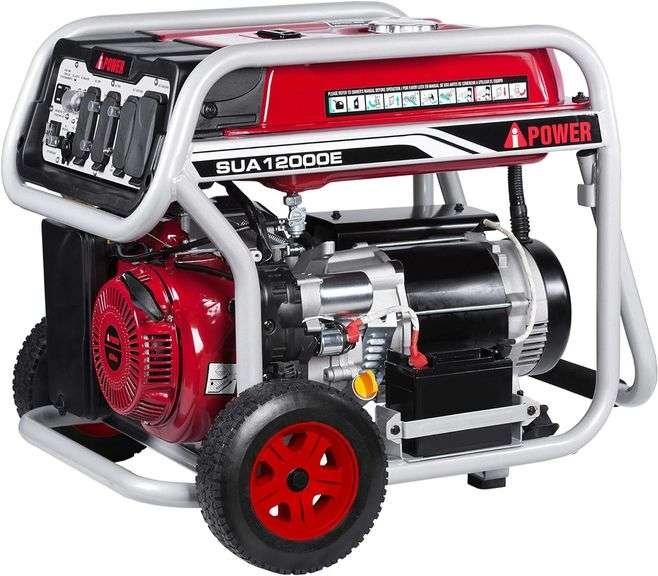
Ready to power up your understanding? Let's dive into the world of 9000-watt generators. These workhorses are far more than just emergency backup; they're versatile powerhouses capable of fueling everything from construction sites to entire mobile businesses and a significant chunk of your home during an outage. If you're looking for robust, reliable, and relatively portable power, understanding 9000-watt generators is your first step to unlocking true energy independence.
At a Glance: What a 9000-Watt Generator Delivers
- Serious Power: Typically offers around 9000 starting watts and 7250 running watts, capable of handling multiple major appliances or power tools simultaneously.
- Versatile Applications: Ideal for home emergency backup, construction sites, food trucks, larger RVs, workshops, and off-grid scenarios.
- Key Features: Look for robust gas engines, electric start for convenience, generous fuel tanks for extended runtime, and a variety of outlets to match your needs.
- Smart Safety: Modern units often include CO Secure technology, automatically shutting down if dangerous carbon monoxide levels are detected, a critical safety feature.
- Portability: Despite their power, many 9000-watt models are designed for mobility with wheels and fold-down handles, though they remain substantial in weight (around 194 lbs).
- Value Proposition: Some models offer exceptional value, making high-output portable power more accessible than ever before.
Unpacking the Power: What "9000 Watts" Really Means
When you see "9000 Watt Generator," it typically refers to the unit's maximum or "starting" wattage. This surge capacity is crucial for kicking off motor-driven appliances like refrigerators, air conditioners, or power tools, which demand a brief burst of extra power to get going. The more important figure for continuous operation is the "running" or "continuous" wattage, which for a 9000-watt class generator often hovers around 7250 watts.
This distinction is vital for planning what you can actually run. While 9000 watts might get your well pump started, it's the 7250 running watts that will keep it, and everything else, humming along. For context, this is enough power to run most essential household appliances, several heavy-duty power tools, or nearly all the amenities in a large RV.
Why a 9000-Watt Generator Might Be Your Perfect Match
The appeal of a 9000-watt generator lies in its exceptional versatility and power capacity without jumping into the realm of fixed, whole-house standby systems. It strikes a sweet spot for those who need more than basic emergency power but still value portability and a manageable investment.
Home Emergency Backup: Keeping Life Moving
During a power outage, a 9000-watt generator can be a lifeline. You're not just powering a few lights; you're maintaining a semblance of normalcy. Imagine simultaneously running your refrigerator (700W), freezer (500W), the crucial furnace fan (800W), your well pump (1000W starting, if applicable), a bank of lights (400W), your TV and internet router (300W), and even a microwave (1000W) or a window air conditioner (1200W). That's serious capability, ensuring comfort and preserving food when the grid goes dark.
On the Job Site: Powering Productivity
For construction or contracting professionals, a reliable power source is non-negotiable. A 9000-watt generator can effortlessly handle the demands of heavy-duty tools. Picture running a circular saw (1500W), an air compressor (1800W starting), multiple work lights (600W), and battery chargers all at once. This kind of power keeps projects on schedule, even when grid power is unavailable or inconvenient.
Mobile Ventures: Food Trucks & Outdoor Events
Entrepreneurship on wheels demands robust power. Food trucks, mobile detailing services, or pop-up shops at outdoor events can rely on a 9000-watt generator to keep operations smooth for extended periods. It easily supports commercial refrigeration (1500W) and various cooking equipment (2000W) for many hours, turning an empty field into a thriving business hub.
RV Living: Bringing Home on the Road
For larger RVs equipped with 50-amp service, a 9000-watt generator can power nearly everything. This includes a 15,000 BTU air conditioner (3000W starting), microwave, entertainment systems, and all your creature comforts. It’s a game-changer for boondocking or staying in campgrounds without hookups, significantly enhancing your mobile lifestyle. Need more insights on staying powered up on the road? Check out our guide on RV Power Needs.
Workshops & Garages: Unleashing Your Tools
Hobbyists and professionals with home workshops will appreciate the muscle of a 9000-watt unit. It can support powerful tools like a table saw (1800W), dust collection systems (1100W), and even many welding machines (requiring around 6000 peak watts). This means fewer compromises on which tools you can run simultaneously.
Mapping Your Power Needs: What You Can Run
To truly understand the capability of a 9000-watt generator, let's look at specific scenarios and combinations of appliances:
| Appliance / Tool | Starting Watts (Approx.) | Running Watts (Approx.) | Notes |
|---|---|---|---|
| Refrigerator | 2200 | 700 | Essential for food preservation. |
| Freezer | 1500 | 500 | Keeps frozen goods safe. |
| Furnace Fan (blower) | 2300 | 800 | Keeps your home warm. |
| Well Pump (1/2 HP) | 1000-2000 | 750-1000 | Crucial for homes relying on well water. |
| Microwave (1000W) | 1500 | 1000 | For quick meals. |
| Window AC (10,000 BTU) | 2200 | 1200 | Keeps a room cool. |
| 3-Ton Central AC | 6750 | 2250 | Can be run individually with 9000W (check total load). |
| Circular Saw (Heavy Duty) | 2000 | 1500 | Construction essential. |
| Air Compressor (3-4 HP) | 4500 | 1800 | For various pneumatic tools. |
| Table Saw | 2200 | 1800 | Workshop staple. |
| Dust Collection System | 1600 | 1100 | Keeps your workshop clean and safe. |
| TV / Internet Router | 300 | 300 | Connectivity and entertainment. |
| Multiple Lights | - | 400 | General illumination. |
| Common Combinations a 9000-Watt Generator Can Handle (at 7250 running watts): |
- Emergency Home Essentials: Refrigerator + Freezer + Furnace Fan + Well Pump + Lights + TV/Internet + Microwave + a small window AC.
- Major Appliance Power: A 3-ton central air conditioner by itself, or a clothes dryer by itself, or a table saw by itself.
- Balanced Household: A 2-ton central air conditioner + Refrigerator + Blender + Dishwasher + Vacuum cleaner (with careful load management, ensuring sensitive electronics are on inverter power if available).
A Note on Inverter Power: While most 9000-watt generators are conventional open-frame models, some may incorporate inverter technology or be compatible with parallel kits to combine inverter units. Inverter generators provide "cleaner" sine wave power, which is safer for sensitive electronics like laptops, smart TVs, and medical equipment. Always check your generator's specifications if you plan to power such devices directly.
Choosing Your Workhorse: Key Features to Look For
Not all 9000-watt generators are created equal. When considering a purchase, several features distinguish a good unit from a great one:
- Engine & Reliability: A robust 420cc OHV (Overhead Valve) air-cooled gas engine is common in this class, often featuring cast iron cylinder sleeves for durability and low oil shutdown to protect the engine from damage.
- Starting System: An electric start is a game-changer for convenience, especially in emergencies. Look for models that also include a recoil (pull-cord) backup in case the battery is low.
- Fuel Capacity & Runtime: A large fuel tank, such as an 8-gallon capacity, can provide impressive runtime – often around 13 hours at 50% load. This minimizes the frequency of refueling, which is critical during extended outages or events.
- Outlet Variety: Ensure the generator has the right outlets for your needs. Common configurations include:
- Four 120V 20A household outlets.
- One 120V/240V 30A twist-lock outlet (L14-30R) for connecting to a transfer switch.
- One 120V/240V 50A outlet (14-50R) for heavy loads or larger RVs.
- One 12V DC outlet for battery charging.
- Safety Features: CO Secure technology (or similar carbon monoxide detection systems) is a non-negotiable safety feature. It automatically shuts down the generator if dangerous CO levels are detected, protecting you and your family.
- Mobility: Despite their weight, integrated never-flat wheels and fold-down handles significantly improve portability. A unit weighing nearly 200 pounds is much easier to move with these features.
- Value: Some brands offer exceptional value, providing high output and robust features at a significantly lower price point than competitors. This makes powerful backup solutions more accessible. For a deeper look into selecting the perfect unit, consult a comprehensive portable generator buying guide.
Getting Started: Setup and Your First Run
Unboxing a new generator can feel daunting, but the initial setup is straightforward. Proper preparation ensures safe and reliable operation from day one.
- Unbox and Assemble: Install the wheels and handles, which are often packed separately. This usually involves basic hand tools.
- Add Engine Oil: Most generators ship without oil. You'll need approximately 1.2 quarts of SAE 10W-30 engine oil. For cold climates (below 32°F/0°C), consider 5W-30. Always check the dipstick and fill to the recommended level.
- Connect the Battery: If it has an electric start, connect the included 12V battery. Ensure terminals are clean and tight.
- Add Fuel: Use fresh, unleaded gasoline (87+ octane) with no more than 10% ethanol. Ethanol can degrade fuel lines and carburetors over time. Fill the tank, but don't overfill.
- Ground the Unit: For safety, always ground your generator. Connect a grounding wire from the generator's grounding terminal to a copper grounding rod driven into the earth.
Your First Start-Up:
- No Load: Ensure absolutely nothing is plugged into the generator.
- Engine Switch ON: Turn the main engine switch to the "ON" position.
- Fuel Valve ON: Open the fuel valve.
- Choke (Cold Start): If starting cold, move the choke lever to the "CLOSED" position.
- Start It Up:
- Electric Start: Press and hold the start button.
- Recoil Start: Give a firm, steady pull on the recoil starter handle.
- Warm-Up & Choke: Once the engine starts and warms up (a few seconds to a minute), gradually move the choke lever to the "OPEN" position.
- Ready for Power: Allow the generator to run for a few minutes to stabilize before connecting any loads.
Operating Your Generator Safely and Effectively
Safe operation is paramount when dealing with powerful equipment like a 9000-watt generator. Ignoring safety guidelines can have serious consequences. To ensure safety, a dedicated guide on generator safety tips is invaluable.
- Outdoor Use ONLY: Always, always place your generator outdoors in a well-ventilated area, at least 20 feet away from any windows, doors, or vents to prevent carbon monoxide poisoning. Never operate it in a garage, basement, or enclosed space.
- Stay Dry: Avoid operating the generator in wet conditions. If rain or snow is expected, use an open-sided canopy or a generator tent to provide shelter, ensuring proper airflow.
- Proper Cords: Use only heavy-duty, outdoor-rated extension cords that are the correct gauge for the load and distance. For high-draw appliances or long runs, 10- or 12-gauge cords are typically required to prevent voltage drop and overheating.
- Balance 240V Loads: If using 240V outlets, try to balance the load across the generator's two 120V circuits to prevent overloading one side.
- Refueling Safety: Always shut down the generator and allow it to cool for at least 15 minutes before attempting to refuel. Gasoline is highly flammable, and spilled fuel on a hot engine can ignite.
- Home Wiring: Never "backfeed" electricity into your home's electrical system by plugging the generator directly into a wall outlet. This is incredibly dangerous and can electrocute utility workers. For home backup, you must use a professionally installed transfer switch or an interlock kit. This isolates your home's wiring from the utility grid. For comprehensive emergency power solutions, understanding these wiring distinctions is key.
Keeping Your Powerhouse Healthy: A Maintenance Schedule
Regular maintenance is the secret to extending the life of your 9000-watt generator and ensuring it's ready when you need it most. Think of it like taking care of a car – neglect leads to trouble.
Essential Maintenance Tasks & Intervals:
- Before Each Use:
- Check engine oil level.
- Inspect fuel level and condition.
- Verify the air filter is clean.
- Look for loose parts, guards, or damaged cooling fins.
- Every 20 Hours (Break-In Period):
- Change the engine oil. This is crucial after the first few hours to remove manufacturing debris.
- Every 50 Hours or 3 Months (whichever comes first):
- Change Engine Oil: Use approximately 1.2 quarts of 10W-30. Run the generator for a few minutes to warm the oil, then drain completely and refill.
- Clean Air Filter: Foam elements can be washed with detergent and water, dried, then lightly saturated with engine oil. Paper elements can be tapped clean or replaced.
- Check/Clean Spark Plug: Remove, inspect for carbon buildup, clean with a wire brush, and regap if necessary. Replace if electrodes are worn.
- Inspect Fuel Filter: Check for debris.
- Clean Fuel Sediment Cup: Drain and clean.
- Every 100 Hours or 6 Months:
- Change Engine Oil: (If under heavy use, otherwise follow 50-hour interval).
- Replace Air Filter: Especially for paper elements.
- Replace Fuel Filter:
- Clean Carburetor: If experiencing fuel-related issues.
- Adjust Valve Clearance: This might require a service professional.
- Clean Fuel Tank/Screen:
- Every 300 Hours or Annually:
- Replace Spark Plug: Use an F7TC equivalent.
- Replace Fuel Lines: Check for cracks or hardening.
- Inspect Electrical Connections: Ensure all are tight and corrosion-free.
- Perform Compression Test: Indicates engine health.
- Deep Clean Cooling Fins: To prevent overheating.
Battery Maintenance:
The 12V battery for electric start needs attention too:
- Keep connections clean and tight.
- Disconnect the negative terminal for long-term storage.
- Apply anti-corrosion spray to terminals.
- Consider a trickle charger if storing for extended periods, especially in cold weather.
- Expect to replace the battery every 2-3 years.
Long-Term Storage (Over 30 Days):
Proper storage prevents common issues like stale fuel and gummed-up carburetors.
- Fuel Stabilizer: Add a quality fuel stabilizer to the tank and run the generator for 10 minutes to circulate it through the fuel system.
- Run Dry: Turn off the fuel valve and let the engine run until it completely stops due to lack of fuel. This empties the carburetor bowl.
- Oil Change: Perform an oil change.
- Cylinder Protection: Remove the spark plug, add a tablespoon of engine oil into the cylinder, slowly pull the recoil rope a few times to distribute the oil, and then reinstall the spark plug.
- Disconnect Battery: Disconnect the negative battery terminal.
- Clean & Cover: Clean the exterior of the generator and cover it to protect from dust and debris.
Following a proper maintenance schedule is crucial for reliability. For a deeper dive into generator care, check out our generator maintenance checklist.
Troubleshooting Common Generator Glitches
Even the most robust generators can encounter issues. Knowing how to diagnose common problems can save you time, money, and frustration.
- Won't Start:
- Check Fuel: Is the tank empty? Is the fuel old or stale (over 30 days old without stabilizer)?
- Oil Level: Many generators have low-oil shutdown. Check the level and fill if needed.
- Battery: For electric start, is the battery charged (should be 12.6V+)? Are connections clean and tight?
- Spark Plug: Is it fouled, wet, or damaged? Clean or replace.
- Fuel Valve/Choke: Is the fuel valve open? Is the choke in the correct position (closed for cold, open for warm)?
- Filters: Are the air or fuel filters clogged?
- Carburetor: If all else fails, the carburetor might be clogged with old fuel residue.
- Electric Start Fails (Recoil Works):
- Check battery charge and connections.
- Inspect the starter solenoid or start switch for faults.
- No Electricity Output:
- Breakers: Check the main circuit breaker on the generator, as well as any individual outlet or GFCI breakers. Reset if tripped.
- Outlets: Test each outlet.
- AVR/Connections: Suspect an Automatic Voltage Regulator (AVR) failure or loose internal wiring connections if no breakers are tripped.
- High/Low Voltage:
- Engine Speed: The engine must run at the correct RPM (typically 3600 RPM for 60Hz power). Incorrect speed affects voltage.
- AVR: The AVR might need adjustment or replacement.
- Load: Too much load can cause voltage drop; too little might lead to slight fluctuations.
- Runs Rough/Surges:
- Fuel/Carburetor: Often related to stale fuel or a dirty/clogged carburetor. Clean or use fresh fuel.
- Air Filter: A dirty air filter restricts airflow.
- Spark Arrester: A clogged spark arrester in the exhaust can cause performance issues.
- Governor: The governor controls engine speed under load; it might need adjustment.
- Lacks Power/Stalls Under Load:
- Carbon Buildup: In the engine or exhaust.
- Altitude: Performance decreases by about 3.5% per 1,000 feet of altitude.
- Valve Clearance: Incorrect valve clearance can reduce power.
- Compression: Low engine compression indicates internal wear.
- Restricted Exhaust: Check for blockages.
- Excessive Vibration:
- Tighten mounting hardware.
- Inspect for damaged engine mounts or other components.
- Could indicate internal engine issues if severe.
- Oil Leaks:
- Check the oil drain plug, gaskets, and seals.
- Ensure you haven't overfilled the crankcase.
- Inspect for a cracked engine case.
- Battery Won't Hold Charge:
- The battery might be old and need replacement (typical lifespan 2-3 years).
- Check the generator's charging system.
- Look for parasitic drains or loose connections.
- Erratic Voltage Readings:
- Inspect for loose or damaged wiring.
- Check for carbon brush wear.
- Instrument panel might be faulty.
Maximizing Your Investment: Tips for Performance & Longevity
Beyond basic maintenance, a few smart practices can significantly enhance your 9000-watt generator's performance and extend its lifespan.
- Smart Load Management:
- Start Largest First: Always start your largest motor-driven loads first (e.g., well pump, air conditioner), allowing them to stabilize before adding smaller loads. This utilizes the generator's starting watts efficiently.
- Distribute Evenly: If your generator has multiple 120V circuits, distribute your loads as evenly as possible to avoid overloading one side.
- Know Your Watts: Understand the difference between surge (starting) and running watts for your appliances.
- Aim for 80%: For continuous operation, aim to use no more than 80% of your generator's running capacity (around 5800 watts for a 7250 running watt unit). This leaves a buffer, prevents overheating, and prolongs engine life.
- Strategic Fuel Management:
- Fresh Fuel is Key: Use fresh gasoline (within 30 days) whenever possible. Old fuel can degrade and clog the carburetor.
- Stabilizer for Storage: If you anticipate storing fuel or your generator for more than 30 days, always add a high-quality fuel stabilizer.
- Partial Fills: For easier transport, consider only partially filling the tank if you don't need the full runtime.
- Safe Storage: Store spare fuel in approved containers in a cool, dry, well-ventilated area, away from ignition sources.
- Enhancing Mobility (for the 194-pound unit):
- Wheel Upgrades: Consider upgrading to pneumatic (air-filled) wheels if the factory wheels are solid, especially if you'll be moving it over uneven terrain.
- Custom Dolly/Pad: For semi-permanent placement, a custom dolly or a permanent concrete pad with a ramp can make positioning and moving the heavy unit much easier.
- Loading Ramps: If you plan to transport it in a truck bed, invest in quality loading ramps.
- Weatherproofing & Protection:
- Operational Shelter: Use a simple, open-sided canopy or generator tent during operation to protect it from rain, snow, and direct sunlight, while maintaining proper ventilation.
- Storage Cover: A quality, breathable generator cover will protect it from dust, debris, and UV rays during storage.
- Cold Weather Prep: For winter, use synthetic engine oil (e.g., 5W-30) and ensure your battery is fully charged or on a trickle charger. Cold starting can be tougher on standard oil and batteries.
Beyond the Basics: Essential Parts and Smart Accessories
To keep your 9000-watt generator running smoothly and enhance its utility, consider these parts and accessories:
Essential Replacement Parts:
- Air Filters: Replace every 100 hours or more frequently in dusty conditions.
- Engine Oil: Keep a supply of 10W-30 (or 5W-30 for cold) on hand for regular changes.
- Spark Plugs: Replace annually or every 300 hours (F7TC equivalent).
- Fuel Filters: Replace every 100 hours or annually.
- 12V Battery: Expect to replace the starting battery every 2-3 years.
Valuable Accessories:
- Generator Cover: Protects against weather and dust during storage.
- Hour Meter: Tracks engine runtime, making maintenance scheduling much easier. Some units have these built-in.
- Extended Run Fuel System: For truly long-term operation, these kits allow you to connect an external fuel tank, dramatically extending runtime.
- Transfer Switch Kit/Interlock Kit: Absolutely essential for safely connecting your generator to your home's electrical panel.
- Maintenance Kit: Often includes air filter, spark plug, and oil for easy routine servicing.
- Wheel Upgrade Kit: If your unit has basic solid wheels, an upgrade to larger, pneumatic wheels can greatly improve mobility.
- Parallel Kit: While less common for large conventional generators, some models might offer a parallel kit to link two smaller inverter generators for combined power – check compatibility if this interests you.
Is a 9000-Watt Generator Right for You? A Value Analysis
A 9000-watt generator offers immense value, but it's not a one-size-fits-all solution. Understanding its strengths and limitations helps you make an informed decision.
The Upsides: Accessible Power and Performance
- Exceptional Value: Some models provide an outstanding power-to-price ratio, making a high-output solution much more affordable than many alternatives. You can find robust units significantly cheaper than competitors.
- Serious Output: Easily handles essential home loads, multiple heavy-duty tools, or significant RV power needs.
- Reliability: With a robust engine design (like a 420cc OHV with cast iron cylinder sleeves) and proper maintenance, you can expect an engine life of 1,500-2,000 hours and an alternator lifespan of 2,000+ hours.
- Mobility: Integrated wheels and handles make it portable enough for various job sites, events, or moving around your property.
- Safety Features: Modern units include critical safety technologies like CO Secure.
Operating Costs: What to Expect Annually
- Fuel: At 50% load, expect roughly 0.6 gallons of fuel per hour. This can add up during extended use.
- Oil Changes: Budget $10-15 for oil every 50-100 hours of operation.
- Maintenance Parts: Around $50-100 annually for spark plugs, air filters, fuel filters, etc.
- Battery Replacement: $40-60 every 2-3 years.
When a 9000-Watt Generator Excels:
- Intermittent Emergency Backup: Perfect for powering critical home needs during occasional outages.
- Mobile Businesses: Food trucks, mobile workshops, or event vendors.
- Construction & Job Sites: Reliable power for tools where grid access is limited.
- Larger RVs: Provides full power for 50-amp RVs, including multiple ACs.
- Workshops & Garages: Powers a range of heavy tools.
When It Might Not Be the Best Fit:
- Full-Time Power: Not designed for continuous, everyday use as a primary power source.
- Ultra-Quiet Applications: Open-frame generators are inherently louder (e.g., 76 dB at 7 meters is comparable to a loud conversation or vacuum cleaner) than inverter generators, making them less ideal for quiet campgrounds or close-quarter events.
- Single-Person Frequent Movement: At around 194 pounds, while portable with wheels, it's still heavy for one person to lift into a truck or maneuver frequently.
- Whole-House Automatic Backup: This is a portable unit, not a permanently installed, automatic standby generator that senses outages and switches on autonomously. For automatic, seamless whole-home power, you'd need a larger, fixed solution.
Ultimately, a 9000-watt generator offers a robust, flexible, and often economical pathway to significant portable power. Whether you're safeguarding your home, powering a livelihood, or embracing life off the grid, understanding its capabilities and commitments is key to harnessing its full potential. For more insights on how to secure your energy needs, exploring broader emergency power solutions can help you make the best choice.
Power Up Your Confidence
Investing in a 9000-watt generator is about more than just buying a piece of equipment; it's about investing in peace of mind. The ability to keep your home warm, your food fresh, your tools running, or your business operating during unexpected power disruptions is invaluable. By understanding its capabilities, committing to proper setup and maintenance, and always prioritizing safety, you'll be well-prepared to tackle any power challenge that comes your way. This powerful ally is ready to stand by you, ensuring that when the grid falters, your world keeps turning. For a comprehensive overview of everything you need to know, revisit Your 9000 Generator Hub.